
Skip to content
archipelago

Andamans

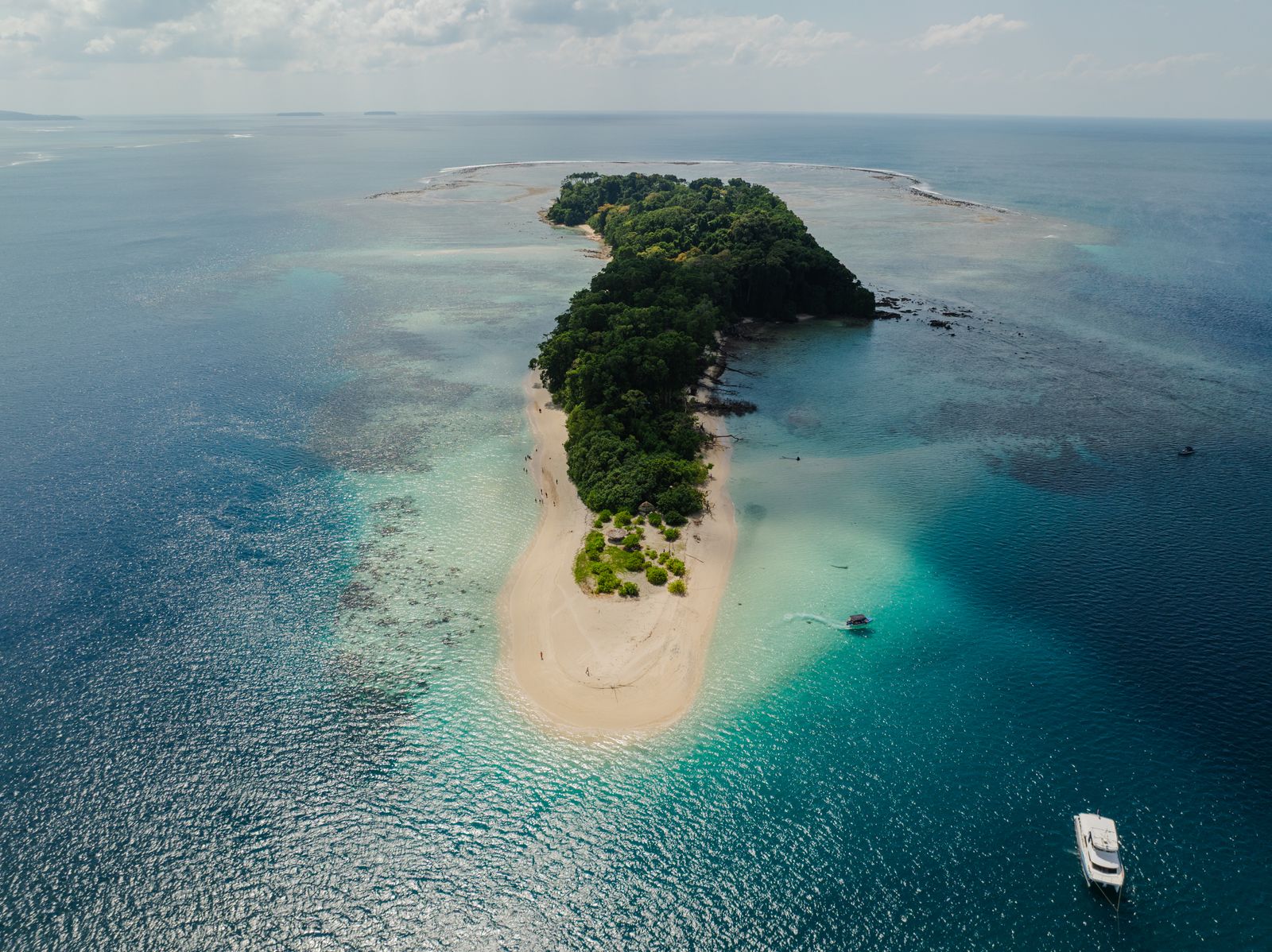
Discover the Andamans through coral-fringed islands, tropical forests and sandy beaches, with opportunities for snorkelling, scuba diving and exploring India's maritime and colonial history.

Best timeNovember to April generally offers the most favourable conditions for beach visits and island travel; rainfall and sea conditions vary throughout the year.
AltitudeSea level to approximately 732 m at Saddle Peak, the highest point in the Andaman Islands.
GatewayVeer Savarkar International Airport (IXZ) in Sri Vijaya Puram, formerly Port Blair, followed by road transfers and inter-island ferries.

At a glance

The Andamans form the northern island group of India's Andaman and Nicobar Islands union territory, in the Bay of Bengal.

Popular visitor destinations include Sri Vijaya Puram, Swaraj Dweep, formerly Havelock Island, and Shaheed Dweep, formerly Neil Island.

Beach stays, guided marine activities and historical sites can be combined with forest walks and visits to mangrove landscapes.

Travel between islands requires planning around ferry schedules, weather and local access restrictions.

Wikipedia ↗

Geography

The Andaman Islands lie between the Bay of Bengal and the Andaman Sea. Their landscapes include forested hills, mangrove creeks, sheltered bays and coral reefs. The archipelago includes North, Middle and South Andaman, Little Andaman and numerous smaller islands.

Culture

Settled communities reflect migration from several parts of mainland India, with Bengali, Hindi, Tamil and Telugu among the languages spoken. Fishing, local markets and seafood feature in everyday coastal life. Indigenous peoples have distinct cultures and protected territories; visitors must respect their privacy and avoid contact or entry into restricted areas.

Highlights

  • Radhanagar Beach on Swaraj Dweep
  • Guided scuba diving and snorkelling around accessible reef sites
  • Cellular Jail in Sri Vijaya Puram
  • Bharatpur and Laxmanpur beaches on Shaheed Dweep
  • Historical ruins on Netaji Subhas Chandra Bose Island, formerly Ross Island
  • Mangrove waterways and limestone caves near Baratang
  • Forest trails in Mount Manipur National Park
  • Saddle Peak National Park near Diglipur

Getting around

Island transfers
Passenger ferries connect major visitor islands. Routes and departures depend on operating schedules and sea conditions.
Local transport
Taxis, auto-rickshaws and local buses serve populated areas, with availability varying by island.
Planning time
Allow transfer days between islands and a weather buffer before your departure flight.

Responsible exploration

Marine activities
Choose appropriately qualified operators, follow briefings and take part only when local conditions permit.
Reef protection
Avoid touching coral, disturbing marine animals or removing shells and other natural material.
Restricted areas
Check current access requirements for each destination. Do not enter tribal reserves or attempt contact with isolated Indigenous communities.
Beach safety
Follow local signs and lifeguard advice; currents, tides and submerged hazards vary between beaches.

Weather and travel references

Climate data
Weather values represent Sri Vijaya Puram/Port Blair station averages for 1991–2020, rather than conditions across every island. Low and high are mean daily minimum and maximum temperatures in degrees Celsius; precipitation is mean monthly rainfall in millimetres. Source: India Meteorological Department.
Seasonal planning
November to April is a useful general travel window, while actual suitability for boat trips and marine activities depends on local weather and sea conditions.

When to go

December to February

Drier season

Warm days and comparatively low rainfall make this a favourable period for beach visits and island excursions, although December can still receive substantial rain.

Reserve accommodation and ferry journeys ahead of busy holiday periods, and confirm marine activities locally.

Low

22.6°C

High

29.3°C

Precipitation

102.7%

Plan your journey

Discover the Andamans through coral-fringed islands, tropical forests and sandy beaches, with opportunities for snorkelling, scuba diving and exploring India's maritime and colonial history.

Plan a trip ↗